How Does a Home Solar Power System Work?
How Does a Home Solar Power System Work?
How Does a Home Solar Power System Work? | Full 2026 Guide
Description: Wondering how home solar power works? This simple guide explains solar panel electricity generation, system components, and the full step-by-step process for homeowners.
Introduction
Many homeowners want to switch to solar, but they don’t fully understand how a home solar power system works. You don’t need an engineering degree to use solar — this guide breaks down the process in simple, easy-to-follow terms.
By the end, you’ll know how sunlight becomes electricity for your lights, appliances, and home. You’ll also learn about key components, grid-tied systems (the most common type in the US), and whether you need a battery for your solar setup.
Basic Principle: How Solar Panels Make Electricity
Home solar systems use photovoltaic (PV) technology to turn sunlight directly into electricity. It’s a clean, renewable process that requires no moving parts — here’s the simple science behind it:
- Solar panels are made of photovoltaic cells, usually silicon (the same material used in computer chips). These cells are arranged in a grid on the panel’s surface to capture as much sunlight as possible.
- When sunlight hits the PV cells, photons (particles of light) knock electrons loose from the silicon atoms. This creates an electric current — a flow of electrons — within the cell.
- This creates direct current (DC) electricity — the same type of electricity used in batteries, phones, and laptops. DC power is useful, but it can’t power most home appliances on its own.
This is the first and most critical step in powering your home with solar energy. Without PV cells converting sunlight to DC power, the rest of the system can’t function.
Main Components of a Home Solar Power System
A complete home solar system isn’t just solar panels — it has 5 key parts that work together to turn sunlight into usable home electricity. Each component plays a vital role in the process:
1. Solar Panels (PV Panels)
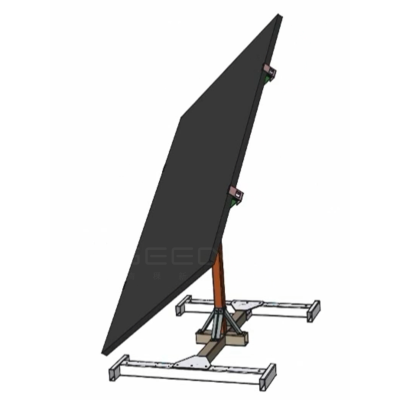
The “collectors” of the system. They mount on your roof (or ground) and capture sunlight to produce DC power. Most home systems use 10–20 panels, depending on energy needs and roof space.
2. Solar Inverter
The “converter” of the system. Since homes use alternating current (AC) power, the inverter’s job is to convert DC power from the panels into usable AC power. It’s often mounted near your electrical panel for easy access.
3. Electrical Panel (Service Panel)
The “distributor” of the system. After the inverter converts DC to AC, the electricity flows to the electrical panel, which sends it to your lights, appliances, and devices (e.g., refrigerators, TVs, air conditioners).
4. Smart Meter / Utility Meter
The “tracker” of the system. This meter records how much solar electricity you use and how much excess power you send back to the public grid. It’s essential for net metering (more on that later).
5. Electric Grid
The “backup” for your system. Grid-tied solar systems (the most common in the US) rely on the grid for power when your solar panels don’t produce enough — like at night, on cloudy days, or during heavy energy use.
Step-by-Step: How a Home Solar Power System Works
Now that you know the components, let’s walk through the full, real-world process of how solar powers your home. This is how a standard grid-tied system (used by 90% of US solar homeowners) operates:
Step 1: Sunlight hits your solar panels
During daylight hours, your solar panels absorb sunlight. The PV cells in the panels convert this sunlight into DC electricity — the more sunlight, the more electricity produced (though panels still work on cloudy days, just at lower efficiency).
Step 2: Inverter converts DC to AC power
The DC power from the panels flows to the solar inverter. The inverter converts this DC power into AC power — the type of electricity your home’s wiring and appliances are designed to use.
Step 3: Electricity powers your home
The converted AC power travels to your electrical panel. The panel distributes the solar electricity to your home’s lights, appliances, and devices in real time. Any power you use directly from your solar system reduces your reliance on the grid.
Step 4: Excess power goes to the grid
If your solar system produces more electricity than you use (e.g., during the day when no one is home), the excess power flows back to the public grid. Your smart meter records this excess power, which is where net metering comes into play.
Step 5: Grid supplies power when needed
At night, when there’s no sunlight, your solar panels stop producing power. During this time, you’ll pull electricity from the grid just like you did before going solar. You can also use credits from excess solar power (via net metering) to offset these grid electricity costs.
What Happens to Extra Solar Electricity?
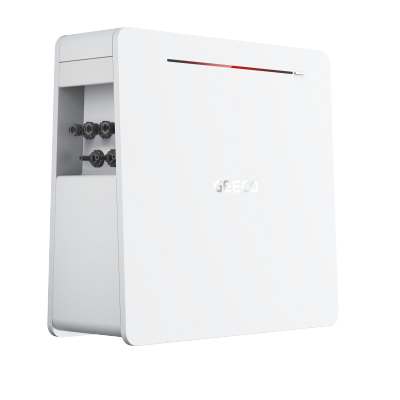
Most US homeowners with solar use net metering — a utility program that makes solar even more cost-effective. Here’s how it works in simple terms: For countries or regions that allow power to be fed into the grid, the GEECO Anti-backflow Controller also plays a valuable role: it can monitor inverter power generation and battery storage, ensuring that every kilowatt-hour of generated electricity is used efficiently for self-consumption without any waste. However, in countries or regions where backflow is prohibited or restricted, net metering is not applicable — and this is where the GEECO Anti-backflow Controller truly shines. It effectively prevents excess solar power from flowing back to the grid with millisecond-level response and precise control, ensuring compliance with local regulations and avoiding potential penalties.
- When you produce more solar power than you use, the excess is sent to the grid.
- Your utility company gives you credits for every kilowatt-hour (kWh) of excess power you send back.
- You can use these credits to pay for grid electricity when your solar system isn’t producing enough (at night or on cloudy days).
Whether in regions with backflow restrictions or those that allow grid connection, the GEECO Anti-backflow Controller is a practical accessory for home solar systems. For areas with backflow restrictions, it solves the core problem of excess power disposal without violating local rules; for areas allowing grid connection, it optimizes self-consumption by monitoring power generation and storage, eliminating electricity waste. Net metering essentially “stores” your excess solar power in the grid, so you don’t waste it. It’s one of the biggest benefits of grid-tied solar systems.