Off-Grid Solar Energy Systems: Toward a Future of Energy Independence
Table of Contents
1.
Introduction: The Rise of Off-Grid Solar Energy Systems
2.
What Is an Off-Grid Solar Energy System?
3.
Key Components of an Off-Grid Solar System
3.1 Solar Panels
3.2 Inverter
3.3 Battery Storage
3.4 Charge Controller
4.
Off-Grid vs. Grid-Tied Systems: A Comparative Overview
5.
Why Choose an Off-Grid Solar System?
5.1 Resilience Against Power Outages
5.2 Ideal for Remote Locations
5.3 Long-Term Cost Savings
5.4 Environmental Benefits
6.
Is an Off-Grid System Right for You?
7.
Real-World Example: A Sustainable Life in Yunnan
8.
Important Considerations and Common Misconceptions
9.
Future Trends: The Democratization of Energy Independence
10.
Conclusion: Harnessing the Power of the Sun
Off-Grid Solar Energy Systems: Toward a Future of Energy Independence
1. Introduction: The Rise of Off-Grid Solar Energy Systems
In recent years, the concept of energy independence has moved from the fringes to the mainstream. With increasing concerns over climate change, rising electricity costs, and the vulnerability of centralized power grids, more individuals and families are exploring alternative ways to power their homes. Among the most promising solutions is the off-grid solar energy system.
Search trends on Google show a significant rise in queries such as “off-grid solar system,” “how to go off-grid,” and “solar power for cabins,” indicating growing global interest—especially in regions like North America, Australia, Southeast Asia, and remote parts of China. This shift reflects not just a technological trend, but a cultural one: a desire for self-reliance, sustainability, and resilience. This article provides a clear, accessible overview of off-grid solar systems, explaining how they work, who they’re for, and why they matter—without technical jargon or boredom.
2. What Is an Off-Grid Solar Energy System?
An off-grid solar energy system is a self-contained power system that operates independently of the public electricity grid. It generates electricity from sunlight, stores it in batteries, and supplies it to a home or facility without relying on external power sources.
Unlike grid-tied systems that remain connected to the utility network, off-grid systems are designed for complete autonomy. This means users must generate and manage all their own electricity, making energy efficiency and proper system design critical.

3. Key Components of an Off-Grid Solar System
A fully functional off-grid solar system consists of four essential components, each playing a vital role in the energy cycle.
3.1 Solar Panels
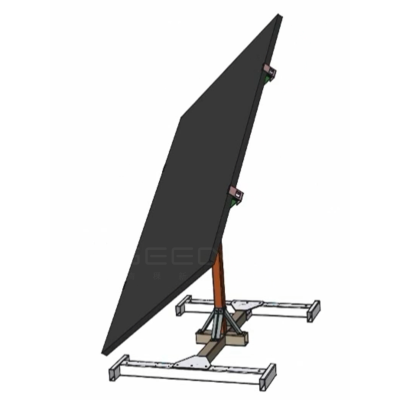
Solar panels are the starting point of the system. Mounted on rooftops, ground racks, or other sunny areas, they convert sunlight into direct current (DC) electricity. The most common types are monocrystalline and polycrystalline panels, with monocrystalline offering higher efficiency and better performance in low-light conditions.
3.2 Inverter
The inverter is responsible for converting the DC electricity generated by the solar panels into alternating current (AC) electricity, which is used by household appliances. Without an inverter, the electricity produced by the panels cannot power most modern devices.
3.3 Battery Storage
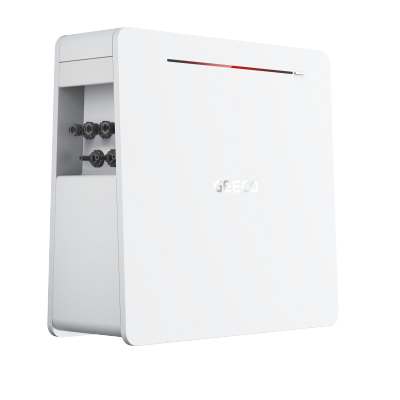
Battery storage is the heart of any off-grid system. It stores excess electricity generated during the day for use at night or during cloudy weather. Common battery types include lithium-ion (lightweight, long lifespan) and lead-acid (lower cost but heavier and shorter lifespan). Capacity is measured in kilowatt-hours (kWh); for example, a 10kWh battery can typically support basic household needs for one night.
3.4 Charge Controller
The charge controller regulates the flow of electricity from the solar panels to the batteries. It prevents overcharging and deep discharging, thereby extending battery life. Two main types are available: PWM (Pulse Width Modulation), which is cost-effective, and MPPT (Maximum Power Point Tracking), which offers higher efficiency and is recommended for most systems.
4. Off-Grid vs. Grid-Tied Systems: A Comparative Overview
Feature | Off-Grid System | Grid-Tied System |
|---|---|---|
Connection to Grid | No | Yes |
Ability to Sell Power | No | Yes |
Battery Required | Yes | Optional |
Best Suited For | Remote areas, energy independence | Urban areas, cost savings |
Initial Cost | Higher (due to battery cost) | Lower |
In simple terms, grid-tied systems help reduce electricity bills, while off-grid systems aim to eliminate dependence on the grid entirely.
5. Why Choose an Off-Grid Solar System?
5.1 Resilience Against Power Outages
With climate-related disasters and grid failures on the rise—from wildfires in Australia to winter storms in Texas—off-grid systems offer a reliable backup. They ensure continuous power even when the main grid fails.
5.2 Ideal for Remote Locations
For homes in rural areas, mountains, or islands where extending power lines is impractical or prohibitively expensive, off-grid solar provides a viable and often the only solution.
5.3 Long-Term Cost Savings
While the initial investment ranges from 20,000 (or 50,000–150,000 CNY), the system typically pays for itself within 10 to 15 years. After that, sunlight becomes essentially free energy, drastically reducing or eliminating electricity bills.
5.4 Environmental Benefits
Solar energy is clean and renewable. A typical off-grid system can reduce carbon emissions by several tons annually—equivalent to planting dozens of trees each year. Choosing solar is a direct contribution to combating climate change.
6. Is an Off-Grid System Right for You?
Consider the following questions:
●
Does your area experience frequent power outages?
●
Do you live in a remote or rural location?
●
Are you committed to reducing your environmental footprint?
If you answered “yes” to one or more, an off-grid solar system may be a practical and empowering choice.
7. Real-World Example: A Sustainable Life in Yunnan
In a mountain village in Dali, Yunnan, a couple transitioned to an off-grid solar system three years ago. Their setup includes:
●
3kW solar panels
●
10kWh lithium battery storage
●
Inverter and MPPT charge controller
With a total investment of approximately 80,000 CNY, they now live completely independent of the grid. Their system powers lights, a refrigerator, a TV, and daily device charging. “Our electricity bill was 300 CNY per month,” said Ms. Li, one of the residents. “Now, sunlight is our only energy source—and it’s free.”
8. Important Considerations and Common Misconceptions
●
Misconception: “Solar panels alone are enough.”
Reality: Without batteries and a charge controller, you cannot store energy for use after sunset.
●
Misconception: “Once installed, no maintenance is needed.”
Reality: Batteries require monitoring and may need replacement every 5–10 years. Regular system checks ensure optimal performance.
●
Fact: Systems can be scaled gradually. Start with essential loads and expand as budget and needs grow.
9. Future Trends: The Democratization of Energy Independence
The cost of lithium batteries has dropped by over 80% in the past decade, making off-grid systems more accessible than ever. Innovations in smart energy management—such as mobile apps for remote monitoring—are simplifying operations. Meanwhile, rising interest in tiny homes, RVs, and eco-cabins is driving demand for portable and modular solar solutions.
Search data shows growing interest in terms like “off-grid solar for RV” and “solar cabin,” signaling a shift toward mobile and minimalist lifestyles powered by renewable energy.
10. Conclusion: Harnessing the Power of the Sun
Off-grid solar energy systems represent more than a technological advancement—they embody a shift toward autonomy, sustainability, and resilience. While not suitable for every household, they offer a powerful option for those seeking freedom from utility bills, grid vulnerabilities, and environmental guilt.
The sun rises every day, offering a free and abundant energy source. With the right system, you can capture that energy and power your life—on your own terms.
As technology improves and costs continue to fall, energy independence may no longer be a niche choice, but a mainstream reality. The future of power is not just green—it’s personal.