Plug-and-Play Solar: The End of Professional Installation
For decades, installing solar panels meant hiring a professional, waiting weeks for permits, and spending thousands of pounds. But in 2026, a quiet revolution is unfolding on balconies, terraces, and garden walls across Europe and North America. Plug-and-play solar has arrived — and it is redefining who can access clean energy.
According to PW Consulting's 2026 market report, the global plug-in photovoltaic system market is projected to reach $3.76 billion by 2032, growing at a compound annual rate of 26.04%. Germany alone has registered over 1.3 million plug-and-play systems, with the actual number likely far higher. This is not a niche trend. It is the democratization of solar power.
What Makes a Solar System Truly Plug-and-Play?
The term "plug-and-play" can be misleading. It does not mean you simply unbox a panel and plug it into a wall socket like a lamp. A true plug-and-play solar kit includes several engineered components designed to work together safely:
- High-efficiency monocrystalline or PERC panels (typically 300–400W each) that convert sunlight into DC electricity
- A certified micro-inverter that converts DC to grid-synchronized AC power, with built-in anti-islanding protection
- Weatherproof cabling and standard plugs (IP67-rated MC4 connectors and region-appropriate plugs such as Schuko or BS1363)
- Integrated monitoring via smartphone app for real-time production tracking
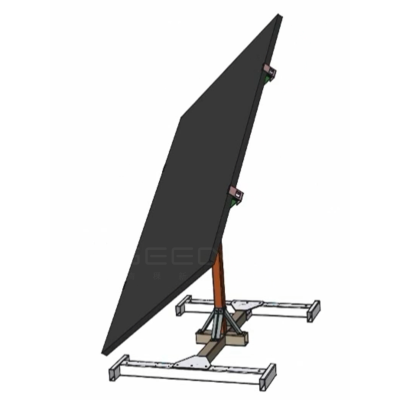
- Mounting hardware designed for balconies, walls, or ground placement without structural drilling
The critical innovation is the micro-inverter. Unlike traditional string inverters that manage an entire array from a single box, micro-inverters operate at the panel level. If one panel is shaded, the others keep producing at full capacity. It also eliminates the high-voltage DC wiring that makes traditional solar installations dangerous for amateurs.
Safety protections are built-in, not optional. Anti-islanding protection automatically shuts down the inverter during grid outages, protecting utility workers. Over-voltage and over-current protection prevents damage to household circuits. Thermal management throttles output automatically if the inverter overheats. Certified plugs and fuses meet regional standards: UKCA in the UK, CE in the EU, and UL in the US.
Step-by-Step: Setting Up Your First System
Installing a plug-and-play solar system takes 15 to 60 minutes, depending on the mounting method. Here is the typical workflow:
- Choose your location. South, southeast, or southwest-facing spots with at least four hours of direct sunlight daily deliver the best results. Use a free app like Sun Surveyor to check shading patterns.
- Mount the panels. Balcony railing brackets require no drilling and install in 30 minutes. Wall mounts need two to four holes. Ground stands offer the most flexibility but need level ground.
- Connect panels to the micro-inverter. Use the supplied MC4 cables. The connectors are keyed — they cannot be crossed.
- Plug into a standard wall socket. Use a dedicated 16A circuit if possible. The system starts automatically and begins feeding electricity into your home wiring.
- Configure the monitoring app. Connect the inverter to WiFi, set your electricity tariff, and start tracking production and savings.
- Register your installation. In Germany, register on the Marktstammdatenregister (free, 15 minutes). In the UK, notify your DNO. In France, declare to Enedis if your system exceeds 3 kWp.
No electrician is required for most plug-and-play installations in Europe. In the US, requirements vary by state — as of early 2026, nearly 30 states have moved to legalize balcony solar systems, with Utah-style reforms leading the way.
What You Can and Cannot Do Without an Electrician
Plug-and-play solar empowers homeowners, but it has clear boundaries. Understanding them keeps you safe and compliant:
| Task | DIY Allowed? | Notes |
|---|---|---|
| Mounting panels on balcony railing | Yes | No drilling required for most kits |
| Connecting panels to micro-inverter | Yes | MC4 connectors are keyed and safe |
| Plugging into standard wall socket | Yes (EU) | UK requires electrician until BSI standard finalized |
| Adding battery storage | Yes | Most battery kits are consumer-installable |
| Modifying household electrical panel | No | Always hire a licensed electrician |
| Installing on shared building facade | Maybe | Check condominium rules and get permission |
The golden rule: if the task involves opening your electrical panel, hire a professional. Everything else is within reach of a careful homeowner with a screwdriver and a spirit level.
Cost Comparison: DIY vs Professional Installation
The financial case for plug-and-play solar is compelling. A typical 800W balcony kit costs £500 to £900 in Europe, while a traditional rooftop system starts at £5,000 and often exceeds £12,000. But the comparison is deeper than sticker price:
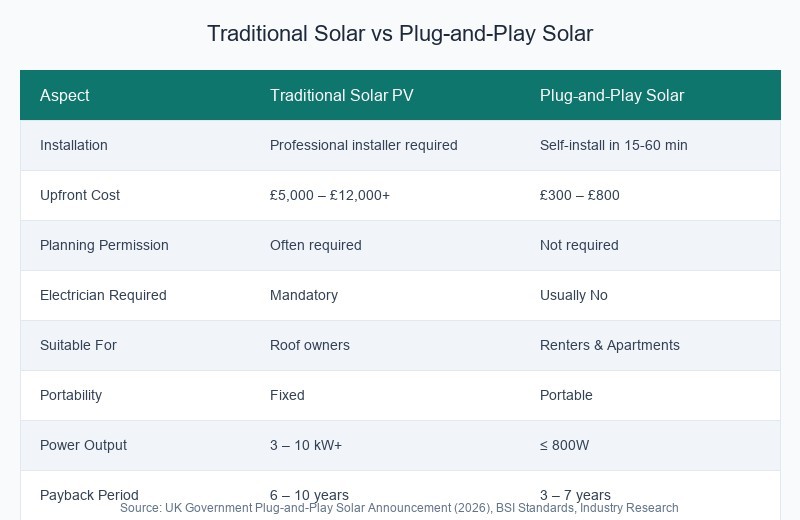
A well-oriented 800W kit in central Europe produces roughly 600 to 800 kWh per year. At £0.24 per kWh, that translates to £144 to £192 in annual savings. Without a battery, the payback period is typically 3 to 7 years — roughly half the time of a traditional system. With a 1.6 kWh battery, self-consumption rises from 35% to 70–80%, pushing annual savings to £200+.
Over 25 years, a £700 kit generating £150 per year yields £3,750 in savings. Subtract the initial cost, and the net gain is £3,050. Traditional solar offers higher absolute savings but requires a far larger upfront investment and professional maintenance contracts.
The Regulatory Trend Toward Easier Home Solar
Governments are accelerating the shift. Germany's Solar Package I legalized 800W plug-in limits and eliminated complex grid operator registration requirements, catapulting the country to over 50% of the European market. The EU Renewable Energy Directive is pushing member states to simplify balcony solar rules. In the United States, UL Solutions introduced UL 3700 in early 2026 — a dedicated safety framework for interactive plug-in photovoltaic equipment.
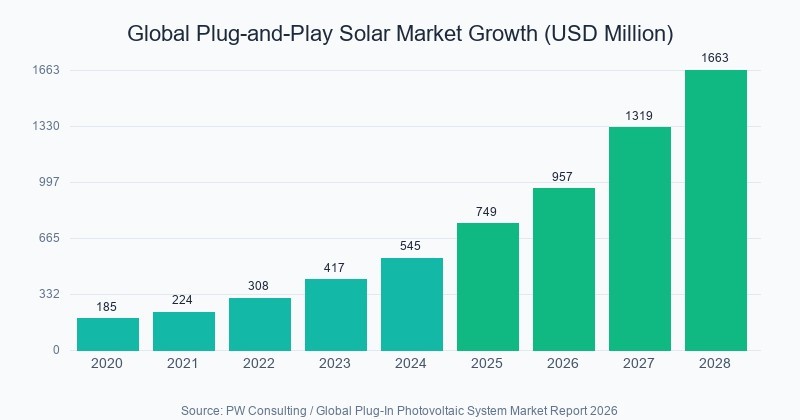
Bright Saver, a nonprofit advocacy group, estimates that if five or more US states adopt Utah-style reforms, system costs could fall to approximately $0.50 per watt within two years — roughly one-quarter the cost of traditional rooftop solar. At those prices, about 24 million American households could own plug-in solar units by 2035.
Real-World Results: A Berlin Family's Experience
To understand plug-and-play solar in practice, consider a three-person household in Berlin who installed an 800W GEECO balcony system in spring 2025. Their apartment faced southwest with no shading. The entire installation — mounting two panels on the railing, connecting the micro-inverter, and plugging into the wall — took 45 minutes.
In their first six months, the system generated 412 kWh. At German electricity rates of €0.35 per kWh, that saved them €144. Annualized, the projected savings are €288. With a system cost of €599, their payback period is approximately 2.1 years. After that, every kilowatt-hour generated is free electricity. The family reports that the monitoring app became a daily habit — checking production and comparing it to household consumption adds a gamification element that keeps them engaged.
Honest Limitations: What Plug-and-Play Cannot Do
No technology is perfect. Plug-and-play solar has genuine constraints that buyers should understand before purchasing:
- Power ceiling: Most countries limit plug-and-play systems to 600–800W. This covers 10–20% of a typical household's consumption, not all of it.
- Daylight dependency: Without a battery, surplus generated while you are at work flows into the grid for free. Batteries help but add €400–€1,500 to the cost.
- Shading sensitivity: While micro-inverters handle partial shading better than string inverters, a balcony with only two hours of daily sun will underperform.
- Grid interaction: Some utilities face revenue pressure as more households generate their own power. Rate structures may shift to recover fixed infrastructure costs.
- Certification gaps: Not all products sold online meet regional standards. Buying from uncertified suppliers risks fire hazards, insurance voiding, and grid instability.
These are not reasons to avoid plug-and-play solar. They are reasons to buy quality equipment from certified manufacturers and set realistic expectations. A balcony solar system is an entry point, not a replacement for a full rooftop array.
GEECO's Appliance-Like Philosophy
At GEECO, we believe solar should be as simple as buying a refrigerator. You do not hire an engineer to install your fridge. You plug it in, set the temperature, and enjoy cold water. That is the experience we are building for solar energy.
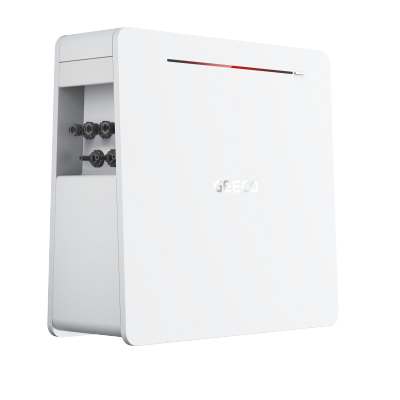
Our GE2000 micro-inverter includes built-in anti-backflow protection that detects grid anomalies in 0.01 seconds — faster than most external limiter devices. The IP67 enclosure handles rain, snow, and dust without additional shelter. And our app provides real-time monitoring, historical data, and performance alerts in a clean, consumer-friendly interface.
We design for the 70% of households who cannot install traditional rooftop solar — renters, apartment dwellers, and homeowners with unsuitable roofs. Plug-and-play is not a compromise. It is a different path to the same destination: clean, affordable energy for everyone.
Ready to start your solar journey? Explore GEECO's plug-and-play balcony kits and discover how easy home energy can be.