What is anti-backflow for solar storage systems?
For those keen on optimizing solar energy utilization, it is crucial to understand that preventing excess electricity from flowing back to the grid—a process known as anti-backflow—is a vital component of modern photovoltaic (PV) and energy storage systems. But before diving into the "anti-backflow" solution, let's clarify what "backflow" is. In a typical setup, power flows one way: from the utility grid into your home or business. When you install a solar energy system, you start generating your own power. If your system produces more electricity than you're consuming at that moment, the surplus power will naturally want to flow in the opposite direction, back onto the public grid. This reverse power flow is called backflow, also known as reverse power or grid injection.
The core purpose of an anti-backflow system is to ensure the efficient and safe utilization of the power you generate. In the world of solar energy, an anti-backflow system acts like a smart gatekeeper. It monitors the flow of electricity and ensures that the power from your solar panels and batteries is primarily used to power your property. It stops any extra electricity from finding its way back into the public grid, where it might not be allowed or could even cause significant safety and stability issues. This control mechanism is fundamental for a safe, compliant, and efficient solar energy installation.

Understanding the 'Why': The Necessity of Anti-Backflow Solutions
The rapid adoption of distributed energy resources, like rooftop solar, has introduced new complexities for an electrical grid originally designed for one-way power flow. While generating your own clean energy is a major step towards sustainability and energy independence, managing the surplus is not just a matter of personal efficiency—it's a critical requirement for public safety and grid integrity. This is where anti-backflow, or zero-export, solutions become indispensable. They address a fundamental challenge: what to do when your panels are producing more power than your property needs. Without control, this excess energy automatically flows back to the utility grid, a phenomenon that can create numerous problems.
Protecting the Grid and Avoiding Penalties with Anti-Backflow
One of the foremost reasons for implementing anti-backflow measures is to safeguard the public power grid and adhere to utility regulations. Uncontrolled export of solar power from thousands of individual sources can introduce instability and safety hazards that grid operators are keen to prevent.
Ensuring Grid Stability and Safety: For example, uncontrolled backflow may cause voltage fluctuations in the public grid, affecting the normal operation of nearby electrical equipment.
The public electrical grid is a finely balanced system that operates within tight voltage and frequency parameters. When numerous solar installations export power simultaneously without coordination, it can cause localized voltage to rise above acceptable limits. This can lead to power quality issues like swells, sags, and flicker, which can damage sensitive electronics for you and your neighbors. Furthermore, and most critically, backfeed poses a severe safety risk to utility workers. During a power outage, workers expect power lines to be de-energized. An island of power from a solar system feeding back onto those lines can have fatal consequences. Certified grid-tied inverters include "anti-islanding" protection to shut down during a grid outage, but anti-backflow systems provide a more proactive layer of control during normal operation to prevent any unwanted export.
Navigating Regulations and Avoiding Fines
Because of the risks to grid stability and safety, most utility companies across the United States have strict regulations regarding the export of power. Many regions operate under "zero-export" or "limited-export" policies, meaning you are either not allowed to send any power back to the grid or are limited to a specific capacity. Attempting to connect a solar system without adhering to these rules can result in significant fines, refusal to grant permission to operate, or even disconnection from the grid. Anti-backflow systems are the approved technological solution to ensure compliance with these regulations. They guarantee that your system operates as a "non-exporting" generator, satisfying utility requirements and allowing you to safely connect your system to the grid.
Maximizing Self-Consumption and Efficiency with Anti-Backflow
Beyond regulation and safety, anti-backflow technology is a cornerstone of achieving maximum financial and environmental benefits from your solar investment. The goal of a solar storage system is not just to produce energy, but to use as much of that self-generated energy as possible. This is known as maximizing "self-consumption."
Using your own solar power is almost always more valuable than exporting it. When you use your solar energy, you are avoiding the need to purchase electricity from the utility at the full retail rate (e.g., $0.25-$0.45/kWh). If you export that same energy, the compensation you receive through feed-in tariffs or net metering programs is often much lower (e.g., $0.05-$0.15/kWh). With an anti-backflow system paired with an energy storage solution (like a battery), you change the equation. Instead of curtailing (wasting) excess power or exporting it for low returns, the system intelligently diverts that surplus energy to charge your battery. This stored energy can then be used in the evening, during cloudy weather, or during peak demand hours when electricity rates are highest, dramatically increasing your self-consumption rate from a typical 30-40% to 70-90% or more. This strategy significantly reduces your reliance on the grid, slashes your electricity bills, and accelerates the return on your solar investment.

Key Takeaways
For those looking for a quick summary, here are the essential points about anti-backflow for solar storage systems:
What it is:
An anti-backflow system is a control mechanism that prevents excess electricity generated by a solar and storage system from flowing back onto the public utility grid.
Why it's necessary:
It is crucial for ensuring grid safety and stability, complying with strict utility regulations that often prohibit or limit power export, and avoiding potential fines.
How it boosts efficiency:
By preventing export, it enables you to maximize self-consumption. Instead of selling surplus power for low rates, you can store it in a battery for later use, drastically reducing your reliance on expensive grid electricity.
How it works:
It uses sensors to monitor power flow at the grid connection point. If it detects power being exported, it instantly signals the solar inverter to reduce its output or directs the excess power to charge the battery.
Advanced solutions matter:
Modern anti-backflow controllers offer ultra-fast response times, highly reliable communication, and precise control, ensuring complete compliance and maximizing the energy harvested from your solar array.
How Anti-Backflow Works: Principles and Technologies
The concept of anti-backflow, or zero-export, is simple: don't let your generated power flow onto the grid. However, the technology that accomplishes this is a sophisticated, high-speed dance between monitoring sensors, intelligent controllers, and responsive power electronics. It's a closed-loop system designed to continuously balance local power generation with local power consumption in real-time.
The Core Mechanics of an Anti-Backflow System
At its heart, an anti-backflow system operates on a constant cycle of monitoring, judgment, and regulation. This process happens in milliseconds to ensure that even with sudden changes in solar production (like a cloud passing over) or shifts in household energy use (like a large appliance turning on), no excess power escapes to the grid.
Monitoring, Judgment, and Regulation for Anti-Backflow
Monitoring: The entire process begins with a crucial piece of hardware: a Current Transformer (CT) or a specialized energy meter. This device is installed right at the grid connection point of the property—the place where the utility's power enters. The CT's job is to act as a vigilant sensor, constantly measuring both the amount of electricity and, critically, the direction in which it is flowing.
Judgment: The data from the CT is fed to a central controller, which is often integrated into the solar inverter or is a dedicated "zero-export device." This controller's logic is straightforward: it checks if the direction of the power flow is "forward" (from the grid into the house) or "reverse" (from the house onto the grid). If any reverse flow (backflow) is detected, even a small amount, the controller determines that the solar system is over-producing.
Regulation: Once backflow is detected, the controller takes immediate action. It sends a command signal to the solar inverter (or inverters). The inverter then precisely throttles down, or curtails, its power output to perfectly match the on-site energy demand. If the system includes battery storage, the controller's action is even smarter. Instead of curtailing power, it instructs the battery system to begin charging, effectively absorbing all the surplus solar energy. This ensures no energy is wasted while still preventing grid export. This entire loop—from detection to regulation—repeats continuously, ensuring seamless and precise control.
Key Anti-Backflow Technologies and Devices
A complete and effective anti-backflow solution relies on several key pieces of technology working in harmony. Each component plays a distinct and vital role in the system.
Anti-Backflow Meters and Sensors: Our Eyes on the Flow
These are the foundational components of any zero-export system.
Current Transformers (CTs): A CT is a donut-shaped sensor that clamps around the main power line. It uses electromagnetic induction to measure the current flowing through the wire without making direct electrical contact. It provides the raw, real-time data needed for the control system to make decisions. Precision is key, which is why CTs with a high accuracy class (e.g., 0.5% to 1%) are preferred for these applications.
Smart Energy Meters: In some systems, a dedicated bi-directional smart meter is used instead of or in addition to CTs. These meters can provide more detailed information, such as voltage, power factor, and harmonics, offering a more comprehensive view of the power quality at the grid connection point.
Inverters with Integrated Anti-Backflow Functionality
Modern grid-tied and hybrid inverters are the "brains and brawn" of the operation. Many high-quality inverters now come with built-in, certified anti-backflow or export-limiting functionality. They have the internal processing power and sophisticated algorithms to receive data from CTs and adjust their power output in milliseconds. This integration simplifies installation and ensures compatibility, as the entire control system is contained within a single unit. The inverter's software can often be configured with a specific export limit—from a set kilowatt value to an absolute zero.
Energy Storage Systems for Advanced Anti-Backflow Control
While inverters can curtail power to prevent backflow, this means potentially wasting valuable clean energy. This is where Energy Storage Systems (ESS), or batteries, provide the most advanced and efficient form of control. When a battery is integrated into the system, the logic changes from "curtail" to "store."
Instead of telling the inverter to produce less, the anti-backflow controller redirects the excess solar generation to the battery. The battery absorbs this surplus energy, storing it for later use. This method achieves perfect zero-export compliance without wasting a single watt of generated power. It maximizes self-consumption and delivers the best possible return on investment for the solar system owner. This makes the combination of a smart inverter, precise sensors, and battery storage the premium solution for anti-backflow control.
Implementing Anti-Backflow: Solutions for Different Solar Setups
Anti-backflow isn't a one-size-fits-all solution. Its implementation depends heavily on the specific design and architecture of the solar and energy storage system. The three most common setups where anti-backflow is critical are distributed photovoltaic systems, DC-coupled storage systems, and AC-coupled storage systems. Each has a unique way of integrating zero-export control.
Distributed Photovoltaic and Anti-Backflow Solutions
Distributed photovoltaic (PV) is a broad term for any solar installation, typically on a rooftop, that generates power at the point of consumption. For a simple grid-tied system without battery storage, the anti-backflow solution is straightforward but also the least efficient.
In this scenario, a zero-export controller monitors the grid connection. When it detects that solar generation is about to exceed the building's load, it commands the solar inverter to throttle down its power production. While this effectively prevents grid export and ensures compliance, it leads to "curtailment"—the intentional reduction of energy production. This means that on a sunny day with low energy usage, a significant portion of the potential solar energy is simply wasted because there is nowhere for it to go. This makes it a compliant but economically suboptimal solution.
DC-Coupled Anti-Backflow Energy Storage Systems
A DC-coupled system is a highly efficient and elegant architecture, especially for new solar-plus-storage installations. In this design, the solar panels and the battery are both connected on the direct current (DC) side of a single, powerful hybrid inverter.
Here’s how anti-backflow works in this highly integrated setup:
The raw DC power from the solar panels flows to the hybrid inverter.
The inverter's internal controller, guided by a CT sensor at the grid connection, intelligently manages the power flow.
If solar generation exceeds the home's AC load, instead of curtailing the panels, the inverter directly channels the surplus DC power into charging the DC battery.
This process is incredibly efficient because the power doesn't need to be converted multiple times (from DC to AC and back to DC). The only conversion happens when power is drawn from the battery or panels to service the AC loads in the house.
This seamless, low-loss energy transfer makes DC-coupled systems an ideal choice for maximizing self-consumption and implementing a flawless zero-export strategy from the ground up.

AC-Coupled Anti-Backflow Energy Storage Systems
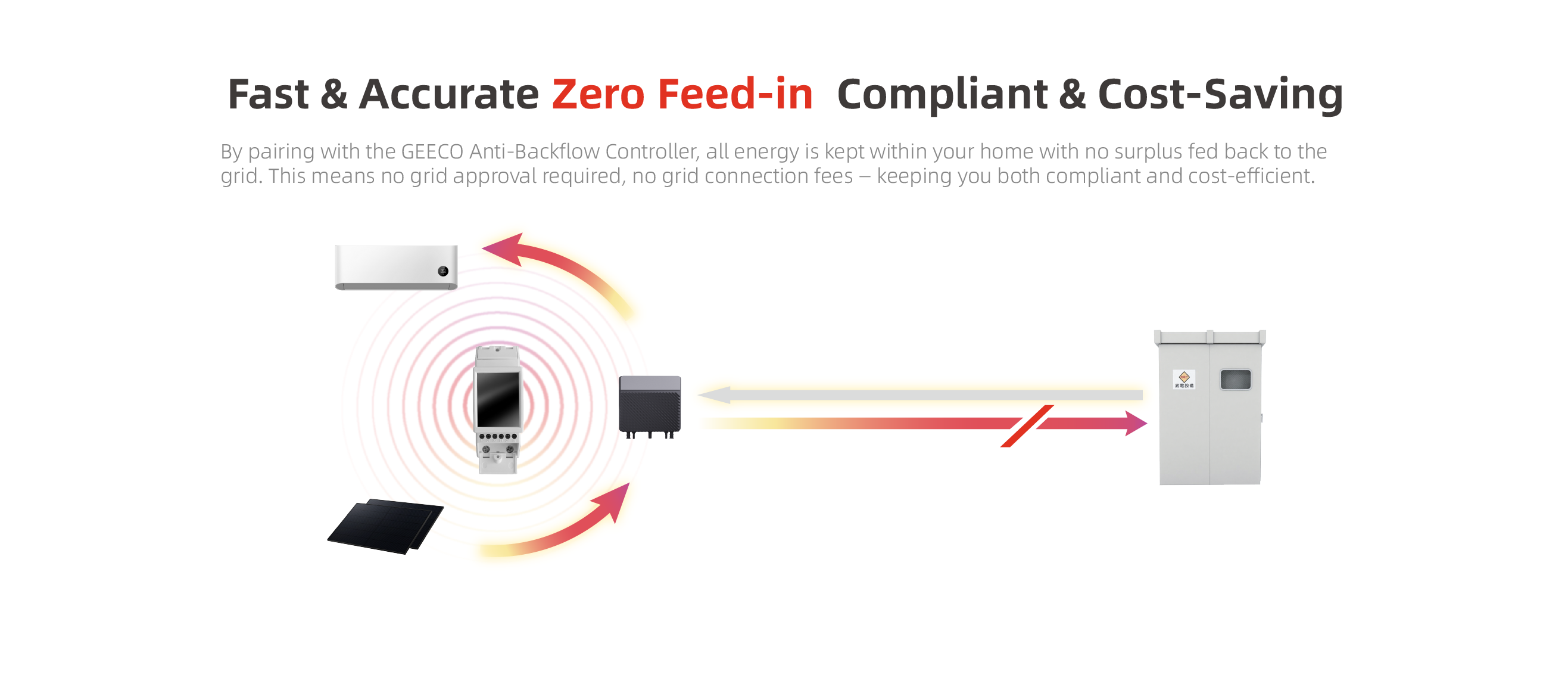
AC-coupled systems are the go-to solution for retrofitting battery storage onto an existing grid-tied solar installation. Notably, GEECO's anti-backflow controller adopts this AC-coupled anti-backflow energy storage system. In this configuration, the solar panels already have their own grid-tied inverter, and the battery system is added with its own separate battery inverter.
Implementing anti-backflow in an AC-coupled system requires more sophisticated coordination:
There are now two inverters in the system: the original solar inverter and the new battery inverter.
An external anti-backflow controller or a smart battery inverter with this capability is installed. It uses a CT sensor at the main grid connection to monitor the net power of the entire home.
If the solar panels are producing more AC power than the home is using, the controller detects the impending export.
It then commands the battery inverter to "pull" that excess AC power from the home's electrical panel and use it to charge the battery. This involves converting the AC power back to DC for storage in the battery.
While this process involves an extra power conversion step compared to a DC-coupled system (which introduces a small amount of efficiency loss), it is a highly effective and flexible way to add zero-export and energy storage capabilities to an existing PV system without replacing the original solar inverter.
Advanced Anti-Backflow Technology: Features, Trends, and the GEECO Anti-Backflow Controller
As solar and storage systems become more intelligent and grid regulations become more stringent, the technology for anti-backflow control is evolving rapidly. Yesterday's simple export limiters are giving way to sophisticated controllers that offer superior precision, reliability, and functionality. Understanding these advanced features is key to selecting a future-proof solution.
Key Features of Effective Anti-Backflow Meters
A modern, effective anti-backflow meter or controller is more than just an on/off switch for grid export. It's an intelligent device defined by several key performance characteristics:
High Precision: The ability to measure power flow with an error rate of less than 1% is crucial. This precision ensures that the system can operate as close to the zero-export threshold as possible without accidentally feeding power into the grid, maximizing energy utilization.
Ultra-Fast Response Time: The controller must be able to detect a change in load or generation and command the inverter to adjust in a fraction of a second (typically under 100 milliseconds). Slower responses can lead to brief periods of unwanted export, which may violate utility rules.
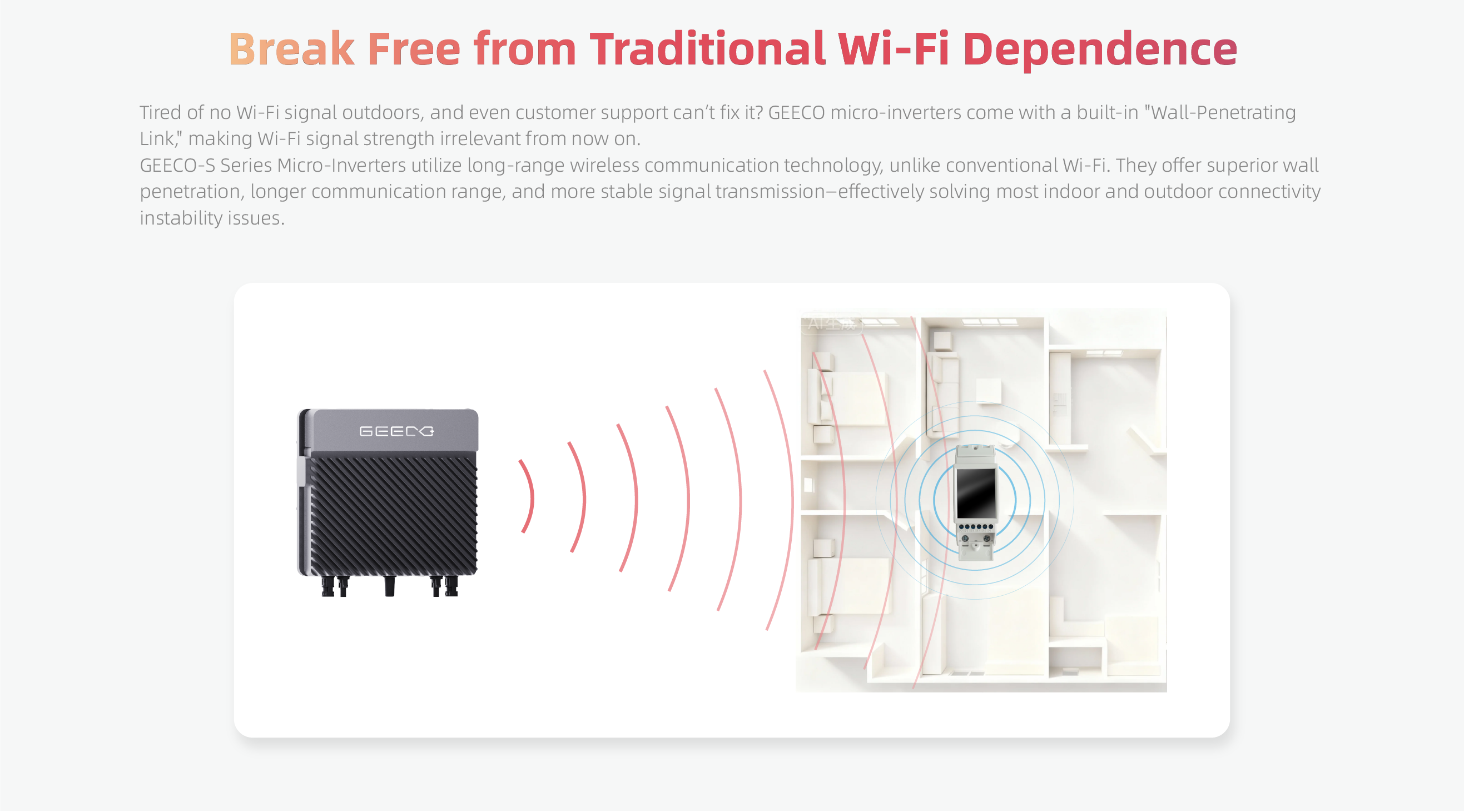
Robust Communication: Reliable communication between the sensor, controller, and inverter is non-negotiable. Instability can cause system failure. Advanced systems use multiple communication pathways (like WiFi and Sub-1G radio frequency) to ensure a stable connection, even through walls or in electronically "noisy" environments.
High Adaptability: The controller should be compatible with a wide range of inverters and adaptable to different grid conditions, including weaker grids found in some rural or developing areas that experience frequent voltage and frequency fluctuations.
Data Logging and a User-Friendly Interface: The ability to log performance data and present it through a clear user interface (like a mobile app) allows homeowners and installers to monitor the system's performance and confirm it is operating correctly.
Our GEECO Anti-Backflow Controller: Next-Generation Protection
While many traditional anti-backflow devices can meet basic requirements, they often suffer from significant drawbacks that limit their performance and reliability. In contrast, the GEECO Anti-Backflow Controller has been engineered to overcome these challenges, setting a new standard for precision and stability.
Here is a comparison highlighting the GEECO advantage:
| Feature | Traditional Anti-Backflow Devices | GEECO Anti-Backflow Controller |
| Response Speed | Slow response times, often exceeding 0.5 seconds to react to power changes. | Ultra-fast response in under 0.1 seconds, far exceeding international standards and preventing any accidental export. |
| Communication | Typically rely on a single communication method (e.g., WiFi only), which is prone to interruption from walls or distance. | Dual-module communication (WiFi + Sub-1G) ensures a stable, wall-penetrating connection up to 50 meters in complex environments. |
| Control Precision | Lack professional algorithms, leading to control inaccuracies with error rates often over 5%. | Proprietary patented algorithms deliver exceptional precision with an error rate of less than 1%, guaranteeing complete zero export. |
| Adaptability | Struggle with weak or unstable grids, leading to malfunctions or trips during voltage fluctuations. | Compact design with strong adaptability to excel in both weak grid environments and various residential or commercial PV storage scenarios. |
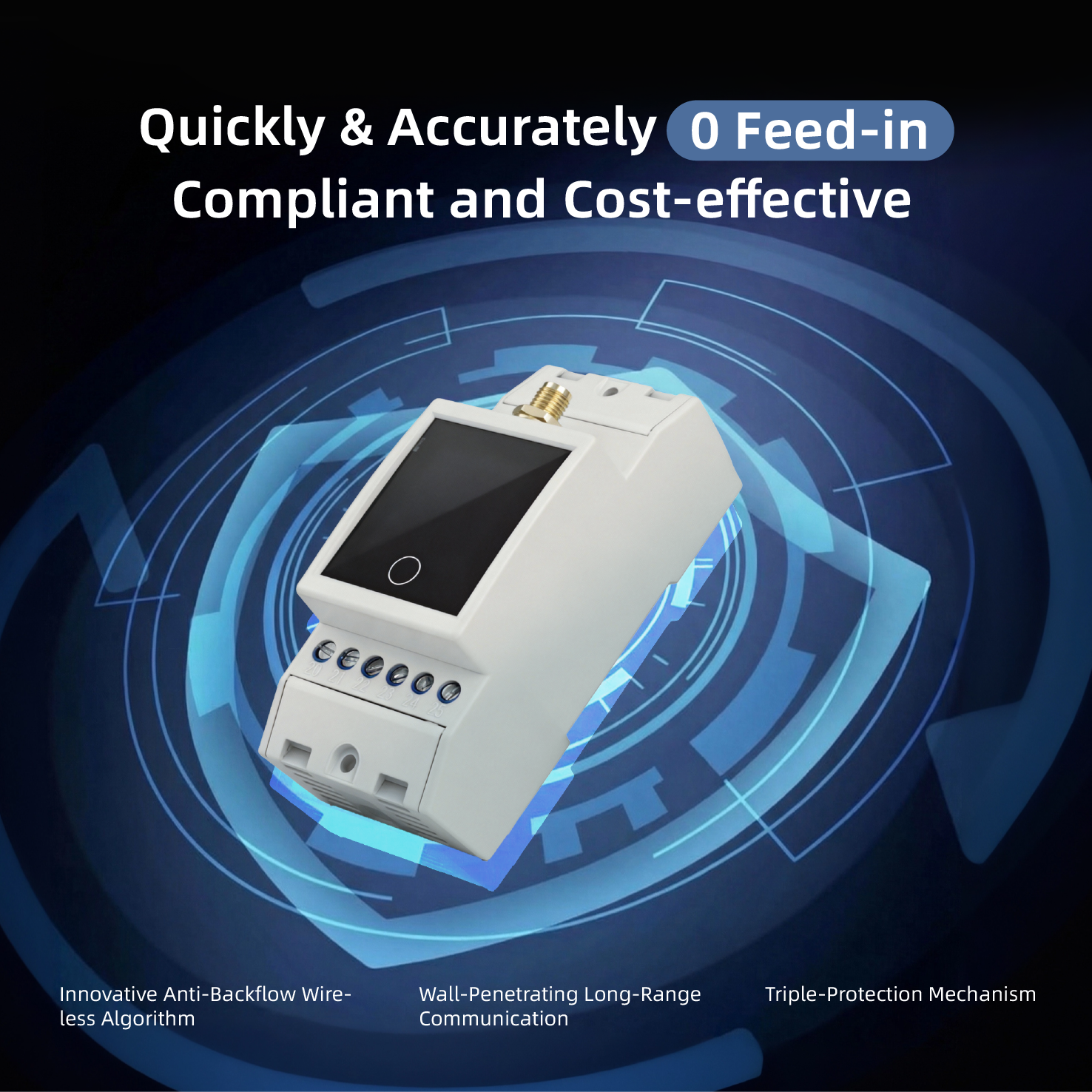
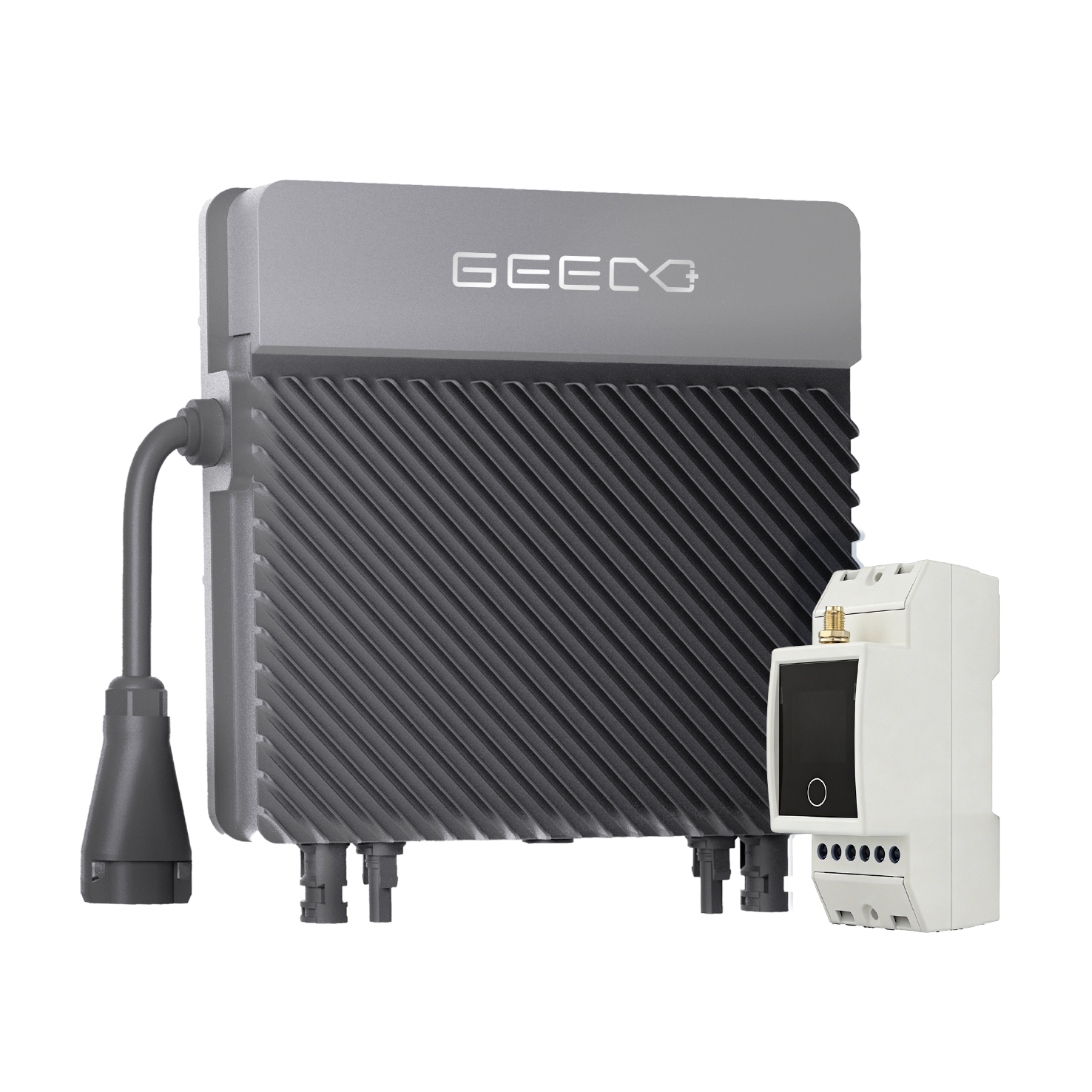
Our GEECO Anti-Backflow Controller, equipped with WiFi and Sub-1G modules for stable wall-penetrating communication, adopts patented algorithms to achieve precise control — a typical example of advanced anti-backflow technology.
The GEECO controller is a perfect illustration of next-generation protection. Its ability to respond almost instantaneously to changes in power flow ensures that the system always remains compliant. The dual-communication modules provide a level of reliability that is critical in real-world conditions where a single WiFi connection can be unreliable. Most importantly, the patented control algorithm provides surgical precision, ensuring that not a single watt is exported unintentionally while allowing the system to utilize every possible bit of self-generated power. This combination of speed, stability, and intelligence makes it an ideal solution for any modern solar and storage system.
Future Trends in Anti-Backflow Systems
The field of energy management is constantly advancing, and anti-backflow technology is no exception. We can expect to see several key trends emerge in the coming years:
AI and Machine Learning Integration: Future systems will use AI to predict household energy consumption patterns and local weather. This will allow the system to proactively manage battery charging and discharging, optimizing for cost savings and grid stability before changes even occur.
Enhanced Smart Home Integration (IoT): Anti-backflow systems will become more deeply integrated into the smart home ecosystem. They will be able to communicate with high-consumption appliances like EV chargers, water heaters, and HVAC systems, automatically scheduling their operation during times of peak solar production.
Vehicle-to-Grid (V2G) Capabilities: As V2G technology matures, the anti-backflow controller will play a crucial role in managing the bidirectional flow of energy from electric vehicle batteries to the home and potentially to the grid, based on complex pricing signals and grid needs.
Improved Cybersecurity: As these devices become more connected, robust cybersecurity protocols will be essential to protect them from external threats and ensure the continued safe operation of the power grid.
Frequently Asked Questions (FAQ)
1. Do I always need an anti-backflow system for my solar panels?
If your system is grid-tied, you almost certainly need some form of export control. Most utility companies have regulations that either prohibit or strictly limit the amount of power you can send back to the grid. An anti-backflow (or zero-export) system ensures you comply with these rules. The only common exception is for completely off-grid systems that have no physical connection to the utility.2. What is the difference between anti-backflow and net metering?
They are related but describe different things. Net metering is a billing arrangement where your utility gives you credit for the excess electricity you do export to the grid. Anti-backflow is a technological control that prevents you from exporting that excess electricity in the first place. You would use an anti-backflow system in areas where net metering is unavailable, the compensation rates are very low, or the utility outright forbids exporting power.3. Can I install an anti-backflow device on my existing solar system?
Yes, you can. This is a very common scenario, especially for homeowners looking to add battery storage. An AC-coupled energy storage system is specifically designed for this purpose. It adds a battery and a smart battery inverter with anti-backflow control that works in tandem with your existing solar setup to manage power flow and prevent grid export.4. With anti-backflow, is my only option to waste (curtail) excess solar power?
No, and this is the most important benefit of pairing anti-backflow with storage. While a solar-only system must curtail power to prevent export, a solar-plus-storage system does not. The anti-backflow controller will intelligently redirect any surplus solar energy to charge your battery instead. This means you get to store and use 100% of the energy you generate, maximizing your investment and energy independence.Conclusion
From what I've seen, anti-backflow technology is not just a regulatory requirement; it's a fundamental component for maximizing the benefits of solar energy and ensuring the stability of our power infrastructure. It acts as the intelligent bridge between your power generation and consumption, ensuring every watt is used safely, efficiently, and in compliance with grid standards. By preventing unwanted power export, these systems protect delicate grid infrastructure and the hardworking personnel who maintain it, all while empowering property owners to achieve true energy independence.
Embracing robust anti-backflow solutions, like the advanced GEECO Anti-Backflow Controller, is a critical step into the future of energy. These next-generation devices move beyond simple restriction, offering the precision, speed, and intelligence needed to optimize energy consumptionminute by minute. By choosing to store and use your surplus solar power, you not only slash your electricity bills but also contribute responsibly to a more sustainable, secure, and decentralized energy future for everyone. Now is the time to take control of your energy.
GEECO Anti-backflow Microinverter