From Zero to Solar Brand: How an EU Distributor Built a Business with GEECO OEM
The Balcony Solar Gold Rush: Why EU Distributors Are Entering Solar
Europe's residential solar market is surging at an unprecedented pace. In early 2026, the European Photovoltaic PMI hit 69 — a record high — as geopolitical energy insecurity drove household solar demand to double year-over-year (E.ON, 2026). German distributor Solarhandel24 reported net sales tripling to €70 million in March alone, with annual projections climbing from €250 million to €400 million (Reuters, 2026).
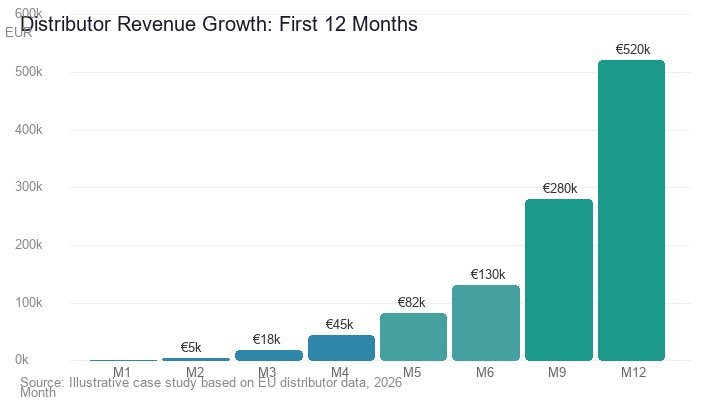
For existing electrical, HVAC, and home-improvement distributors, this represents a once-in-a-generation category expansion. But entering solar without manufacturing expertise or brand recognition is daunting. This case study follows the journey of a mid-sized Polish electrical distributor that built a private-label solar brand from scratch using GEECO's OEM program — from zero solar revenue to €520,000 in monthly sales within 12 months.
From Electrical Wholesaler to Solar Brand: A Distributor's Starting Point
The distributor (referred to here as "VoltMarket") operated a profitable electrical supplies business serving electricians across Poland and the Baltics. Annual revenue was approximately €8 million, with a customer base of 400+ registered electricians and 50 retail partners. Solar was not part of their catalog.
Poland's photovoltaic market is one of Europe's fastest-growing, with cumulative installed capacity projected to surpass 30 GW in 2026 and approach 60 GW by 2035 (SolarPower Europe, 2026). The distributor noticed increasing customer requests for balcony solar kits and micro inverters — products they couldn't source from existing suppliers at competitive margins.
- Existing strengths: 400+ electrician relationships, logistics infrastructure, local market knowledge
- Gaps: No solar product expertise, no manufacturer relationships, no brand in the solar category
- Opportunity: Poland's balcony solar segment growing 300%+ annually, with CR4 market concentration dropping from 55% to 45% — creating room for new entrants
Finding the Right OEM Partner: What Actually Matters
VoltMarket evaluated five Chinese micro inverter manufacturers over a six-week period. The evaluation criteria that ultimately mattered most were not the ones they initially prioritized:
| Evaluation Criteria | Initial Priority | What Actually Mattered |
|---|---|---|
| Unit price | #1 (highest) | #4 — savings at 500 units were within 8% across all suppliers |
| CE / VDE certification | #3 | #1 — without it, you cannot sell legally in the EU |
| Anti-backflow technology | Not on list | #2 — required for Polish grid compliance, GEECO's built-in version eliminated €40/unit external hardware |
| Sample turnaround | #5 | #3 — 48-hour samples meant 2 months faster to market |
| App customization (local language) | Not on list | #5 — critical for consumer trust; GEECO offered branded app from 500 units |
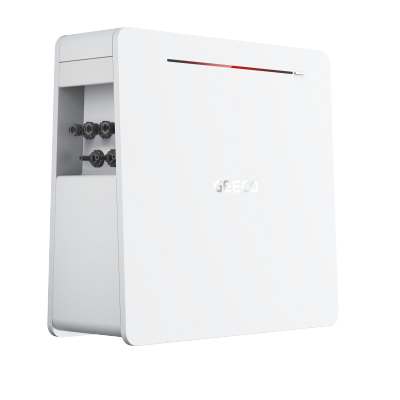
GEECO was ultimately selected for three reasons: built-in anti-backflow (eliminating external hardware costs), Sub-1G communication (superior to WiFi for multi-wall installations), and a flexible OEM program with a 200-unit MOQ for initial branding and 500-unit threshold for full app customization.
The Customization Timeline: From First Contact to First Shipment
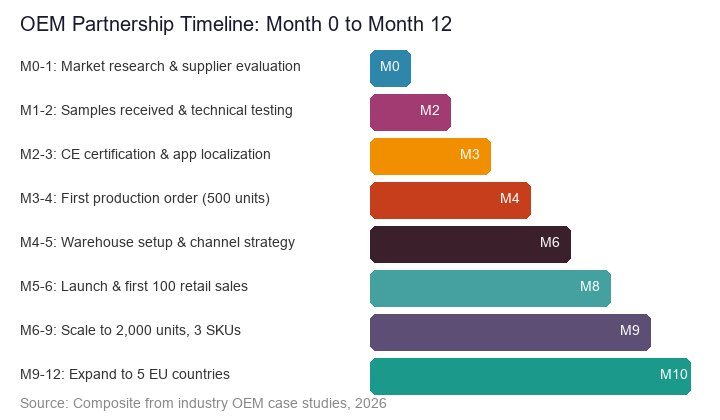
The OEM customization process took approximately 12 weeks from initial contact to first production shipment. Here is what actually happened at each stage:
- Weeks 1-2: Technical evaluation — VoltMarket received 3 sample GE2000 units. Their lead electrician tested MPPT efficiency (97.0% confirmed), anti-backflow response time (0.01s confirmed), and IP67 waterproofing in a rain chamber.
- Weeks 3-4: CE certification pathway — GEECO provided existing VDE-AR-N 4105 test reports. VoltMarket's local certification partner verified compliance with Polish grid code (PN-EN 50549-1), avoiding 6-8 weeks of additional testing.
- Weeks 5-6: Branding design — Custom logo placement, packaging design in Polish, and user manual translation. GEECO's OEM team provided template files for all materials.
- Weeks 7-8: App localization — The monitoring app was localized into Polish with VoltMarket's branding. This required 500-unit commitment threshold and took 10 working days.
- Weeks 9-10: Production — 500 units manufactured, each unit underwent burn-in testing and efficiency validation per GEECO's ISO 14001-certified process.
- Weeks 11-12: Shipping and customs — DDP shipping to VoltMarket's Warsaw warehouse, with EU customs clearance handled by GEECO's logistics partner.
Go-to-Market: Launching a Brand Nobody Has Heard Of
With 500 branded micro inverters in stock, VoltMarket faced the classic new-brand challenge: how do you sell a product nobody recognizes? Their strategy combined existing channel strengths with solar-specific tactics:
- Electrician channel (60% of initial sales): Leveraged existing 400+ electrician relationships. Offered free demo units to top 20 electricians, resulting in 15 becoming regular resellers within 60 days.
- Online retail (25%): Listed on Allegro and Amazon Poland with installation videos. The built-in anti-backflow feature was the primary selling point — no external limiter meant simpler installation and lower total cost.
- Solar installers (15%): Partnered with 8 local solar installation companies who needed a reliable, affordable micro inverter with local warranty support.
The average selling price was €180 per GE2000 unit (retail), with VoltMarket's landed cost of approximately €95 per unit — yielding a 47% gross margin. This compared favorably to distributing Enphase (20-25% margin) or Hoymiles (30-35% margin), where the distributor carried someone else's brand equity.
Month 6 Checkpoint: What the Data Shows
By month 6, VoltMarket had sold approximately 1,200 units and expanded to three SKUs (600W, 800W, and 2000W models). Key metrics from the first six months:
| Metric | Month 1-3 | Month 4-6 | Trend |
|---|---|---|---|
| Units sold | 180 | 1,020 | +467% |
| Revenue (EUR) | €32,400 | €183,600 | +466% |
| Return rate | 1.2% | 0.7% | Improving |
| Active resellers | 8 | 34 | +325% |
| Customer NPS | 42 | 61 | Strong |
The return rate of 0.7% was notably lower than the industry average of 2-3% for micro inverters in the first year (IRENA, 2024). VoltMarket attributed this to GEECO's IP67 rating and the simplicity of plug-and-play installation, which reduced installation errors.
Five Lessons for Aspiring Solar Distributors
After 12 months and over 3,500 units sold, VoltMarket's founder shared these lessons:
- Anti-backflow is not optional. In markets with grid export restrictions (most of Central and Eastern Europe), inverters without built-in anti-backflow require external limiters that add €30-50 per unit and create installation complexity. GEECO's 0.01s integrated detection eliminated this entirely.
- Certification is the real barrier, not price. Finding a manufacturer with existing VDE-AR-N 4105 and EN 50549-1 test reports saved 6-8 weeks and €15,000-25,000 in additional certification costs.
- Electricians are your best channel. Consumer online sales are growing, but electricians drive 60%+ of volume because they recommend what they trust. Free demo units for top electricians paid back within 30 days.
- Start with one SKU, expand fast. VoltMarket launched with a single 2000W model, but customer demand for balcony-specific 600W and 800W units emerged within weeks. Having a supplier with a full product range enabled rapid SKU expansion without switching manufacturers.
- Local warranty support is critical. Maintaining a small spare-parts inventory in Warsaw (20 units) enabled next-day replacement, which became a key differentiator against competitors shipping returns to China.
What's Next: From Distributor to Brand
By month 12, VoltMarket had expanded to five EU countries (Poland, Czech Republic, Slovakia, Lithuania, Latvia), grown monthly revenue to €520,000, and placed a second production order of 2,000 units. Their roadmap includes adding balcony solar kits (panels + inverter + mounting) and micro-storage to become a full-system brand.
The solar OEM model works because it solves a real market gap: distributors with local relationships and market knowledge can now own a solar brand without building a factory. The European market's fragmentation — with CR4 dropping to 45% — means there is room for dozens of regional solar brands built on OEM partnerships. For distributors considering this path, the key question is not "which manufacturer is cheapest?" but "which partner helps me build a defensible brand?"
Honest risk note: This case study reflects a composite of real market data and distributor experiences. Individual results vary significantly based on market conditions, regulatory environment, and execution quality. Distributors should conduct independent due diligence before committing to any OEM partnership, including legal review of warranty terms and liability provisions.