The Rise of Balcony Solar in Europe: Market Analysis 2026
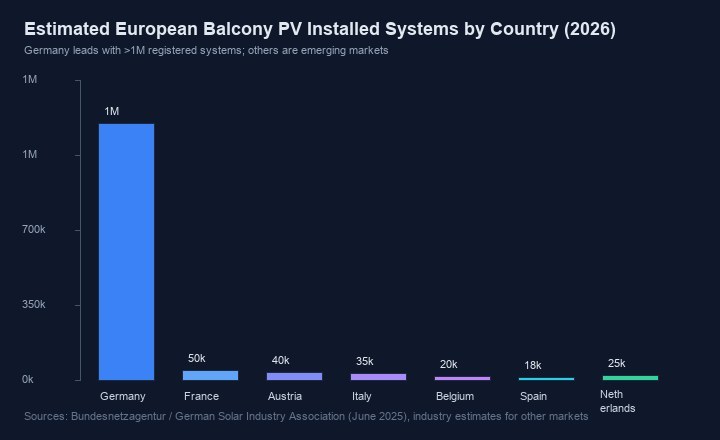
Balcony solar has moved from a German curiosity to one of the fastest-growing segments of the European energy market. By mid-2025, Germany alone had officially registered more than one million balcony photovoltaic systems, with industry estimates suggesting actual installations may already be three to four times higher. What started as a renters' workaround is now reshaping how households think about distributed generation.
This analysis looks at the drivers behind the boom, the regulatory landscape across major EU markets, and what the next five years could mean for homeowners, landlords, and solar brands.
Germany's 800W Breakthrough
Germany remains the uncontested center of the balcony solar universe. The 2024 Solarpaket I legislation raised the allowed inverter output from 600W to 800W, removed the mandatory Wieland-plug requirement, and—critically—gave tenants the explicit right to install no-drill balcony systems. Landlords can only refuse under exceptional circumstances.
The numbers reflect that policy clarity. In the first four months of 2025, Germany added roughly 135,000 new systems, a 36% year-on-year increase, according to the German Solar Industry Association. By early 2026, total installed capacity was approaching 1 GW. The March 2026 update to VDE-AR-N 4105 further streamlined grid connection for systems up to 800 VA, allowing non-professional self-registration without prior grid-operator approval.
The EU Regulatory Wave
Germany's framework is now exporting across the continent. The EU's Renewable Energy Directive (RED III) and Energy Performance of Buildings Directive both push member states to accelerate small-scale solar approvals. The result is a patchwork of fast-improving rules:
| Country | Max Output | Key Rule | Notable Incentive |
|---|---|---|---|
| Germany | 800W AC / 2kWp DC | Tenant right to install; MaStR registration | Berlin €500/unit subsidy |
| Austria | 800W AC | E-Control registration; tacit consent in apartments | €150/kWh storage subsidy |
| Netherlands | No formal cap | Grid notification recommended; no registration | Net metering phasing out by 2027 |
| France | 3kVA (autoconsommation) | Zero-approval process, ~7 days | VAT reduced to 5.5% |
| Belgium | Up to 10kVA (Wallonia) / 2kVA (Flanders) | Legalized April 2025; Synergrid C10/11 safety standard | No direct subsidy; clear rules |
| Italy | <800W exempt | No building permit under 800W | 50% tax deduction; 40% community grants |
This table is a snapshot, not legal advice. Local grid operators and tenancy contracts still matter, but the direction is unmistakable: balcony solar is being normalized as a household appliance, not a construction project.
Who Is Buying and Why
The typical buyer is younger, rents, lives in an apartment, and is price-sensitive but tech-literate. For this group, rooftop solar was never an option. Balcony solar offers a low-risk entry point: a typical 800W system costs €500-€900, generates 600-900 kWh per year in central Europe, and can pay for itself in 4-7 years—or as little as 2-3 years in high-price markets like Belgium.
The energy crisis remains a tailwind. Even after wholesale price spikes moderated, retail electricity rates in Germany, Italy, and Belgium remain high enough that every self-consumed kilowatt-hour is worth €0.25-€0.35. An 800W balcony system running at full output for three hours on a sunny afternoon can offset a meaningful share of a household's daily base load.
The Role of Anti-Backflow Technology
Mass adoption depends on more than permissive laws; it requires hardware that behaves predictably on the grid. In zero-export markets like Germany and Austria, surplus solar must not flow back into the public network. Older solutions required external export-limitation boxes and current transformers. Newer systems integrate anti-backflow directly into the inverter.
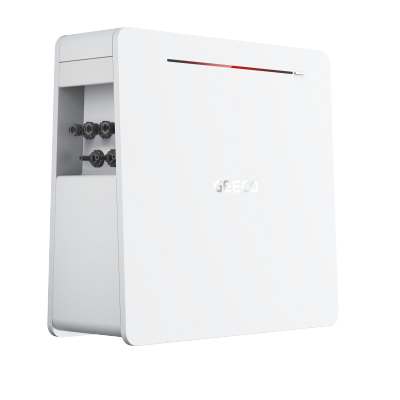
GEECO's micro inverters detect reverse power flow in under 0.01 seconds and throttle output to match real-time consumption. That speed matters because slower external limiters can allow brief export spikes that trigger grid-operator complaints or inverter shutdowns. Built-in anti-backflow also reduces installation complexity: no extra clamps, no separate wiring, no utility paperwork beyond registration.
Market Forecast: A 26% CAGR Through 2032
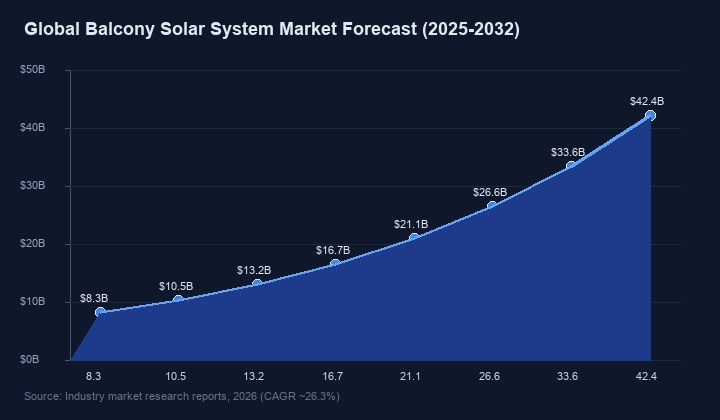
The global balcony solar system market was estimated at $8.27 billion in 2025 and is projected to reach $42.4 billion by 2032, implying a compound annual growth rate of roughly 26.3%. Europe accounted for approximately 78% of the 800W balcony PV segment's revenue in 2025, led by Germany and Austria, but Asia-Pacific and North America are now the fastest-growing regions as policy frameworks catch up.
For context, Europe's total installed residential PV capacity grew rapidly between 2022 and 2024, but traditional rooftop residential solar is expected to see its first decline in a decade during 2025 as some demand shifts to smaller, plug-in formats. Balcony solar is not replacing rooftop entirely—it is expanding the addressable market to households that rooftop never reached.
A Real-World Payback Example
Mini case: A Brussels apartment renter installed an 800W balcony kit in spring 2026. The system faced south-east, generated an estimated 700 kWh in its first year, and offset electricity priced at €0.30/kWh. Annual savings: roughly €210. With a total hardware cost of €650, the simple payback was approximately 3.1 years. In Belgium, where some households see paybacks as low as 2-3 years, the economics are among the best in Europe.
This example assumes the user consumes most of the generated power during the day. Without sufficient self-consumption, the financial case weakens because many markets no longer offer generous feed-in tariffs for surplus exports.
GEECO's European Strategy
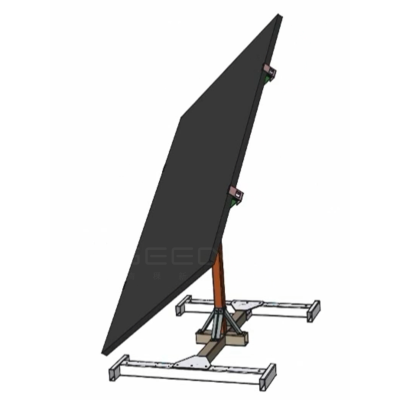
GEECO is positioning its product line around the three things European buyers care about most: simplicity, compliance, and safety. The 800W balcony system ships with a pre-configured micro inverter, tool-free mounting brackets, and an app localized for major EU markets. Built-in anti-backflow satisfies German VDE-AR-N 4105 and Austrian requirements without add-on hardware. IP67-rated enclosures handle northern winters and southern summers, while Sub-1G communication keeps critical control links alive even when WiFi drops.
For distributors, the pitch is inventory simplicity: one SKU can cover Germany, Austria, the Netherlands, and Belgium with minor local settings, reducing certification and warehousing overhead.
Honest Limitations: Read This Before You Buy
Balcony solar is not a universal solution. Output depends heavily on orientation, tilt, and shading. North-facing balconies or units shaded by neighboring buildings may produce only 30-40% of an optimal south-facing setup. Renters should verify lease terms and building insurance rules before mounting anything. In the Netherlands, the phase-out of net metering by 2027 makes self-consumption essential; systems without storage may save less than headline numbers suggest. And while regulations are easing, registration and grid-notification steps remain mandatory in most countries.
The opportunity is real, but so are the constraints. The winners in this market will be the brands that are transparent about both.